project
Maningrida Aged Care Facility Concept
| Client | FaHCSIA |
| Location | Maningrida, NT |
| Completion Year | 2025 |
| Sector | Healthcare |
| Remote |
| Project Manager |

Dave Bennett
Director & Senior Architect
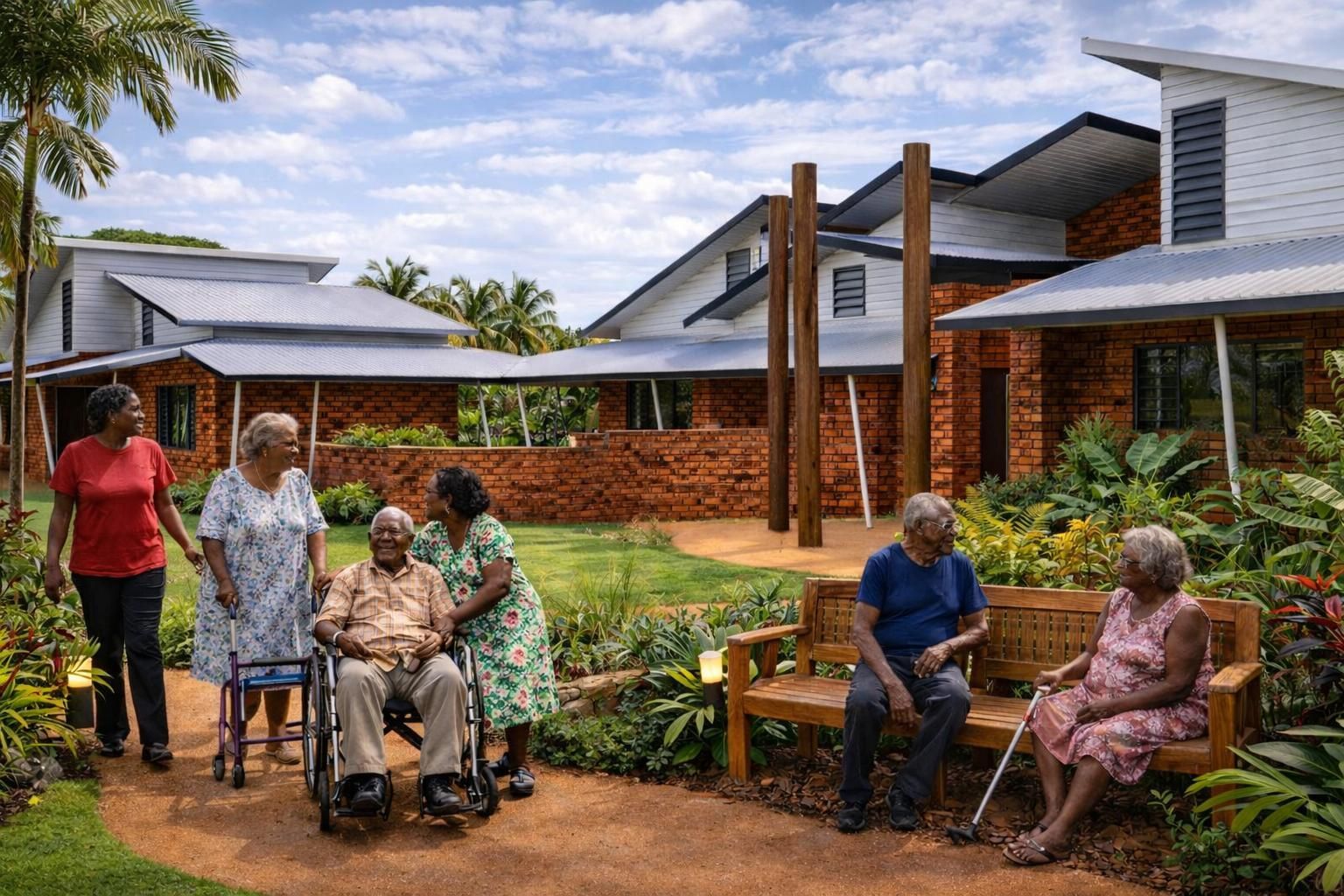
The Maningrida Respite and Aged Care Facility was designed by Bennett Architecture as a culturally responsive environment supporting senior members of surrounding homeland communities. Developed for FaHCSIA, the concept design provides short-term accommodation for elders requiring medical support, respite services, or assisted living, while also accommodating accompanying family members to maintain important kinship and caregiving relationships. The design prioritises dignity, comfort, and cultural connection through residential-style accommodation, communal gathering spaces, and strong connections to the landscape. Careful consideration of site conditions, privacy, security, durability, and tropical climate responsiveness resulted in a facility that supports health, wellbeing, family cohesion, and connection to Country.
Key objectives
Provision of culturally responsive respite and aged care accommodation.
Support for family involvement through accompanying accommodation.
Creation of dignified, residential-style care environments.
Integration of privacy and safety measures responsive to site conditions.
Strengthening health outcomes, cultural continuity, and connection to Country.
Project Story
The Maningrida Respite and Aged Care Facility was designed as a culturally responsive support environment for senior members of surrounding homeland communities. Engaged by FaHCSIA (Department of Families, Housing, Community Services and Indigenous Affairs), Bennett Architecture created the concept design for a facility that responds to the need for periodic care accommodation, enabling seniors to access medical support, respite services, and assisted living while maintaining strong cultural and family connections. Recognising the central role of kinship structures, the project incorporates support accommodation for accompanying family members. Clients are accommodated for short-term stays to receive care and assistance, while also allowing family members to stay nearby. This ensures cultural obligations, caregiving practices, and social structures remain intact throughout the care process.
The planning approach prioritised dignity, familiarity, and a non-clinical residential character, incorporating shaded outdoor spaces, communal gathering areas, and clear visual connections to landscape. Material selection and construction methodology were guided by the realities of remote delivery, durability in tropical climates, and ease of maintenance.
The selected site near the barge landing point required careful consideration of operational and social impacts, particularly during barge days when increased activity and transient populations affect privacy and security. As a result, screening, fencing, and layered landscape buffers became integral design elements. These measures provide protection and visual privacy without creating a defensive or institutional environment, balancing openness with safety.
This project exemplifies a culturally informed, place-responsive approach to aged care infrastructure in remote Indigenous communities — supporting health outcomes while reinforcing family cohesion, cultural continuity, and connection to Country.