
Larrakia Cultural Centre – Designing gallery Landscapes
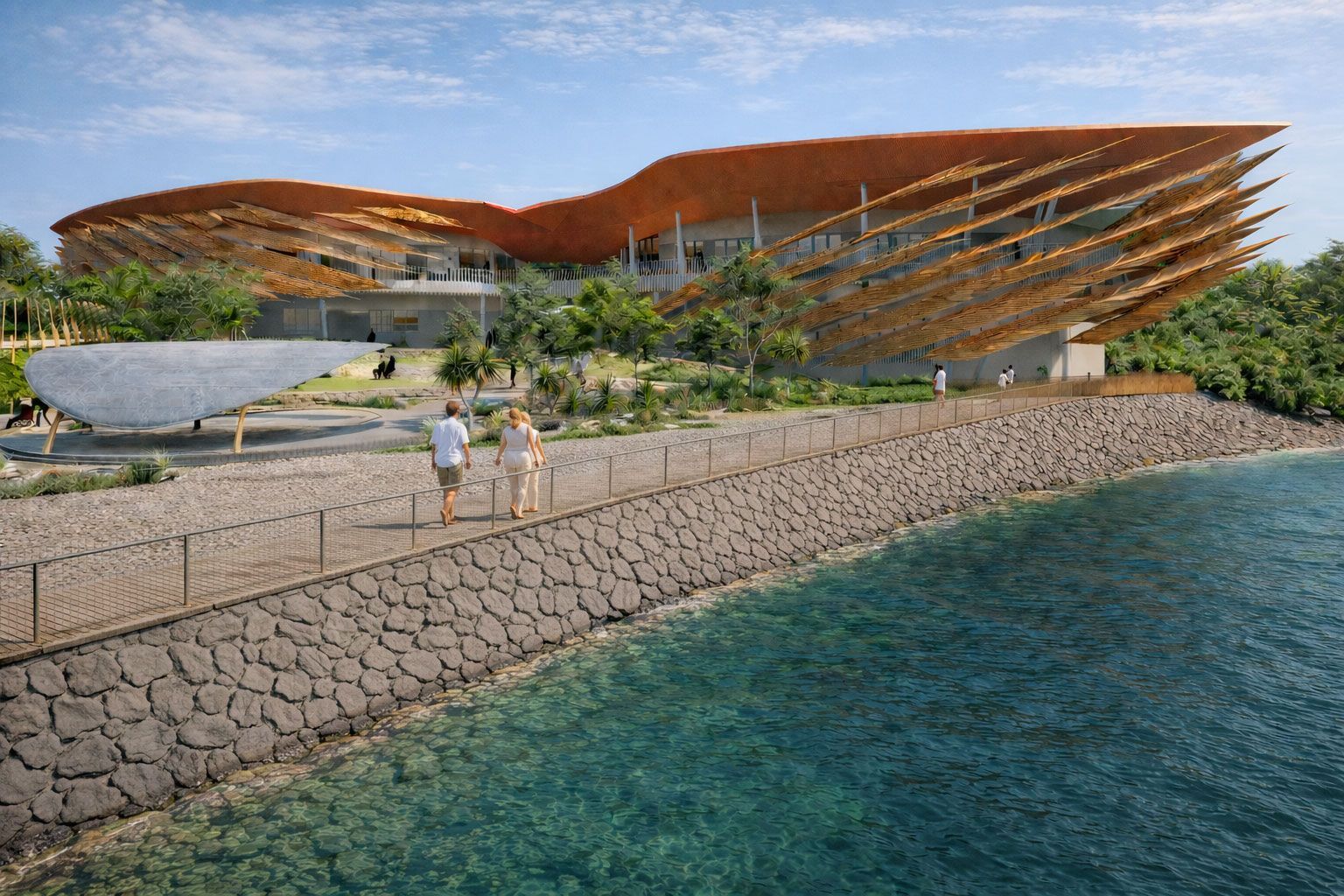
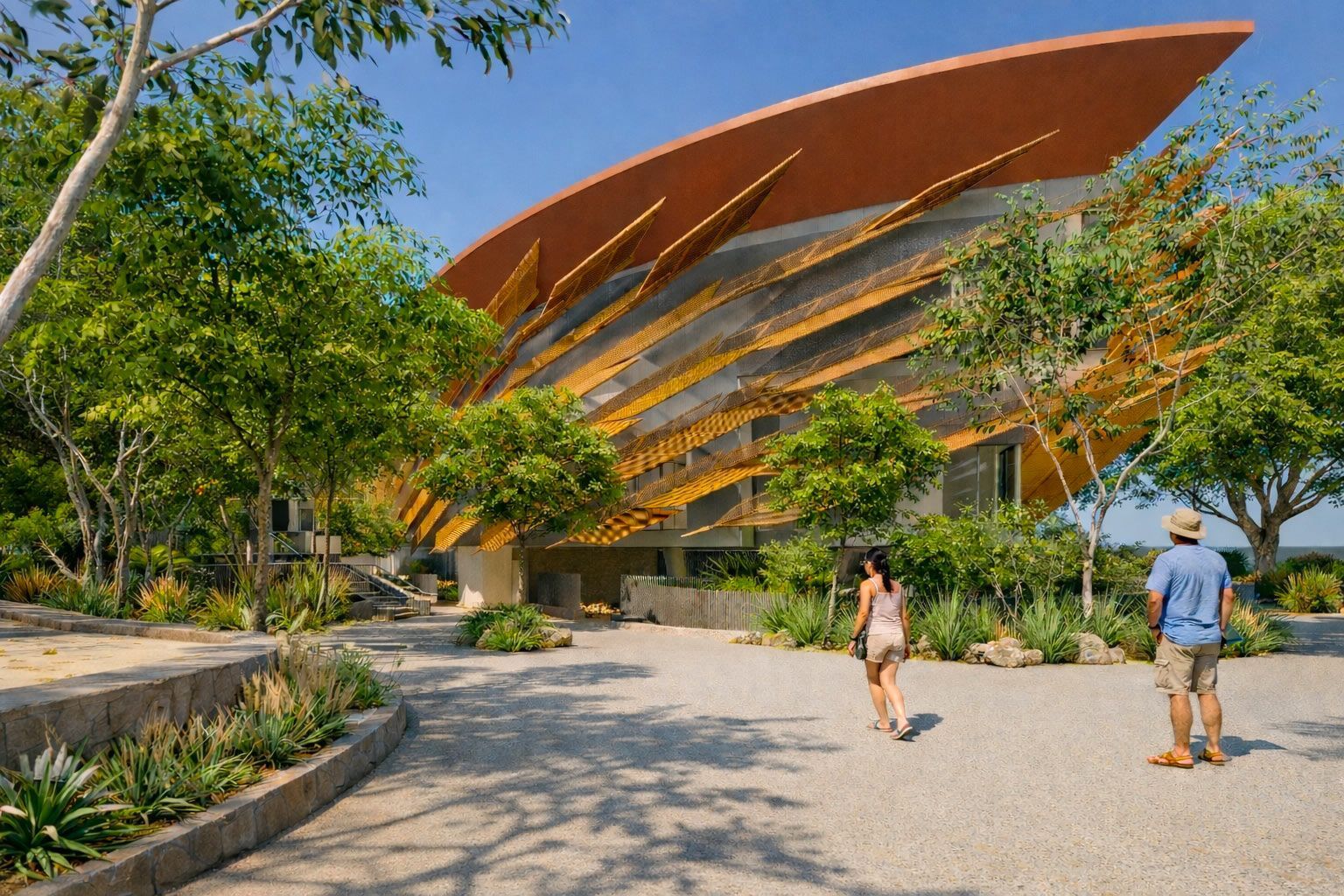
The Larrakia Cultural Centre offers a compelling case study in how cultural institutions are evolving, from places that ‘display’ knowledge to places that ‘embody’ it.
What stands out is not just the outcome, but the process. The project repositions Traditional Owners from consultees to decision-makers, with the Larrakia community shaping everything from spatial sequencing to ecological narratives. This level of governance challenges conventional gallery models and demands longer, more iterative engagement, but the result is far more authentic and resilient.
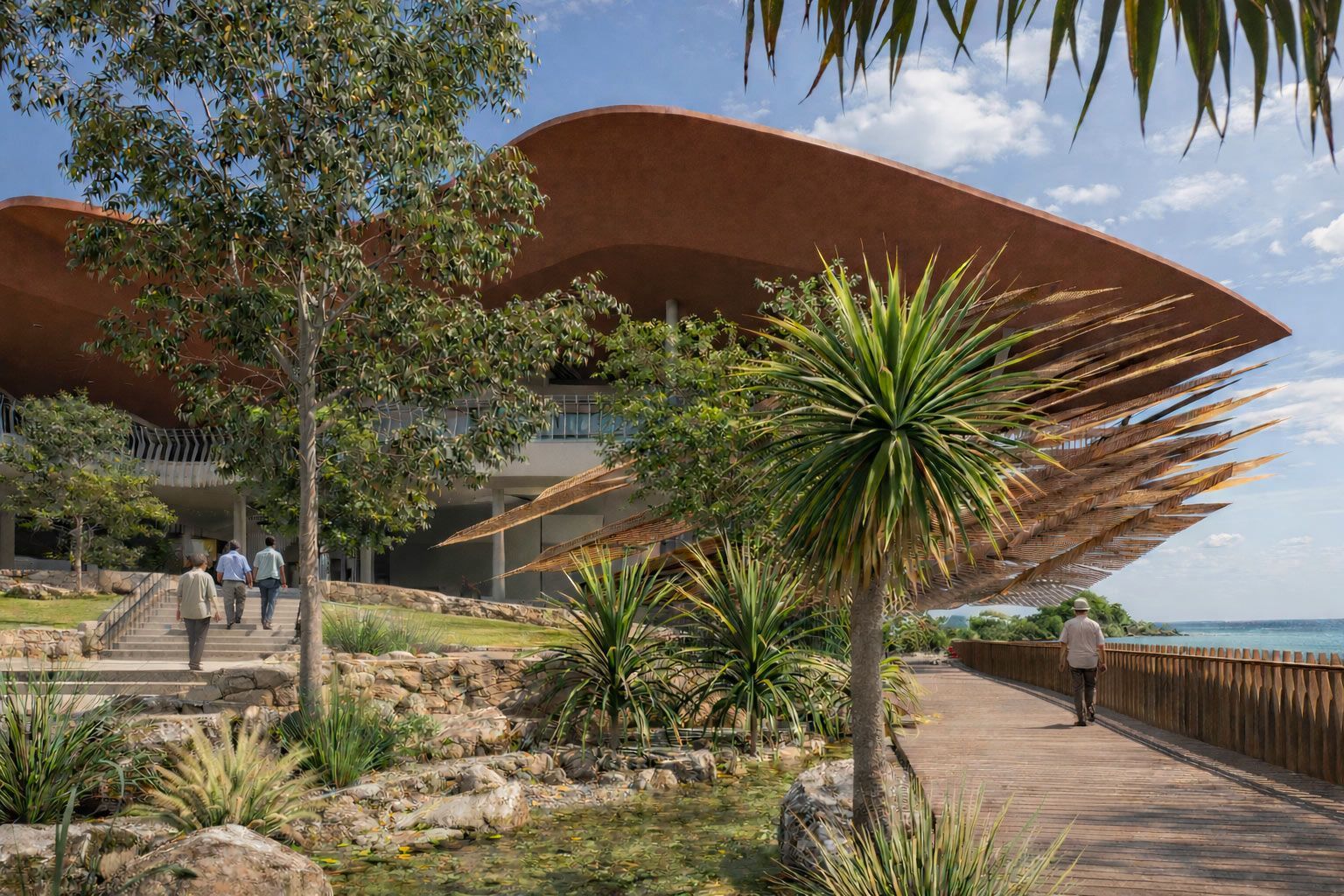
There are clear parallels emerging across the gallery sector. Institutions are moving away from static exhibition models toward immersive, landscape-led experiences that prioritise storytelling, movement, and sensory engagement. At Larrakia, the site itself becomes the narrative, guiding visitors through savannah, monsoon forest, freshwater and coastal systems as a lived expression of Country.

Key learnings for practitioners:
- Cultural authority must sit at the centre of governance, not at the edge of consultation.
- Landscape and public realm are no longer supporting elements, they are primary storytelling devices.
- Successful visitor engagement is layered: physical experience, interpretation, and participation working together.
- Designing for dual audiences (community + visitors) requires clear spatial and cultural boundaries.
Perhaps most importantly, the project reinforces that meaningful engagement with visitors starts with meaningful engagement with custodians. When that foundation is strong, the visitor experience becomes deeper, more educational, and more memorable.
As galleries and cultural institutions continue to evolve, projects like this set a new benchmark, one where design excellence is inseparable from cultural integrity.
Interested to hear how others are rethinking gallery experiences in response to these shifts.


Recent Posts
